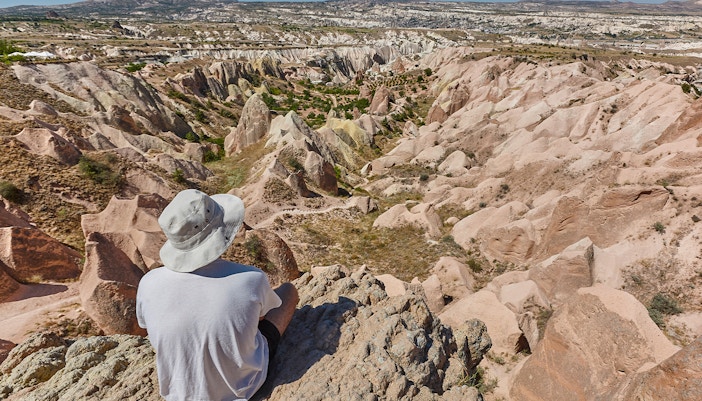
Goreme Valley | A closer look at the region’s rich and diverse history

Goreme Valley in Cappadocia is a testament to nature’s artistry and human ingenuity. Over millennia, volcanic eruptions gave rise to its surreal landscape, which became a refuge for ancient civilizations. Carved cave dwellings and churches tell stories of spiritual devotion and survival. Learn more about the key moments that shaped this extraordinary region.

Goreme Valley | A brief timeline of its formation and history

  • Volcanic eruptions (approximately 14 million - 2.5 million years ago): Volcanic eruptions from Mount Erciyes, Mount Hasan, and Mount Güllü covered the area with lava and ash.
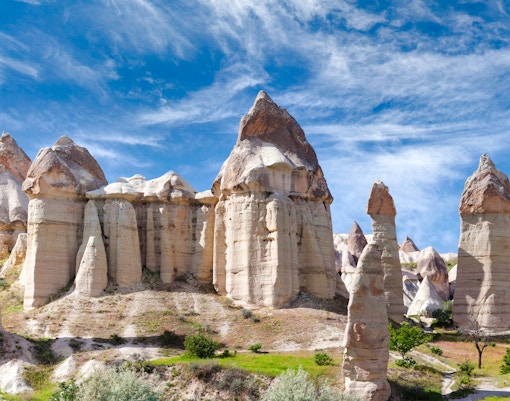
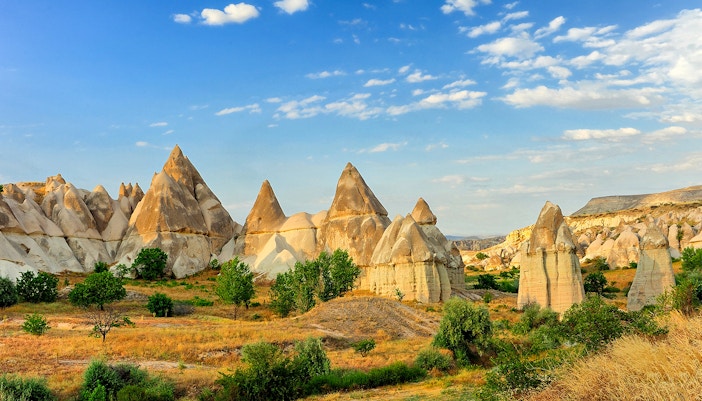
  • Formation (over millions of years): The ash from the volcanic eruptions resulted in layered, soft, and porous soil, and erosion created the tuff landscapes and fairy chimneys.
  • Early inhabitants (around 1800 BC): The Hittites were one of the first people to recognize the landscape’s potential for carving and settlement. 
  • Christian settlers (4th century): Christians fleeing persecution settled in the region and built monasteries, churches, and dwellings.
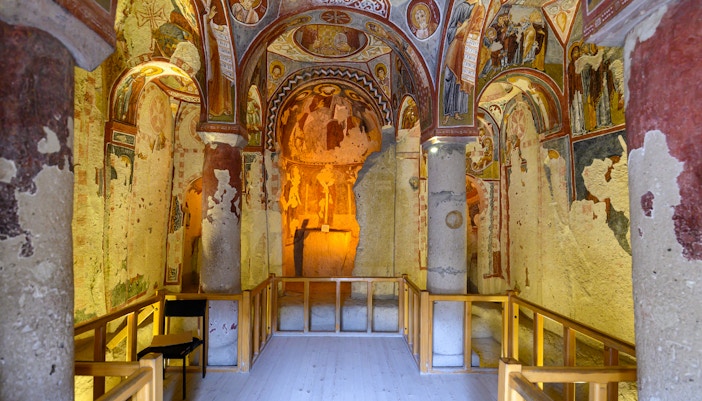
  • Byzantine era (7th century): Frescoed cave chapels featuring Byzantine art and further settlements grew.
  • Medieval developments (around the 10th century): The valley evolved as a center under various regional empires, and multiple tunnel channels and underground cities were developed.
  • UNESCO World Heritage Site (1985): Goreme Valley becomes a protected area and is officially designated as a UNESCO World Heritage Site.

Goreme Valley’s history explained

Geology and formation
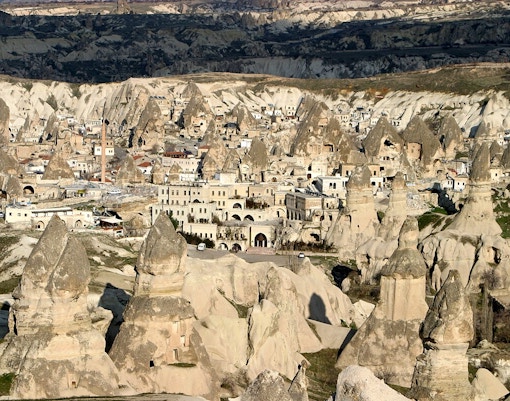
Goreme Valley’s story begins millions of years ago with dramatic geological events. Powerful volcanic eruptions from Mount Erciyes, Mount Hasan, and Mount Güllüdağ blanketed the region in thick layers of ash. Over time, this ash hardened into soft tuff rock, while wind and water slowly sculpted it into the fairy chimneys, valleys, and cones seen today. This unusually workable stone would later shape how people lived, worshipped, and survived in Cappadocia.

Hittite Period (1800 BC - 1200 BC)

By the Hittite period, humans had already recognized the potential of this landscape. The Hittites were among the first to carve shelters, storage spaces, and early underground structures into the tuff rock, using it as natural protection during times of conflict. These early modifications laid the foundation for Cappadocia’s long tradition of rock-cut living.
Phrygian Era (8th - 7th centuries BC)

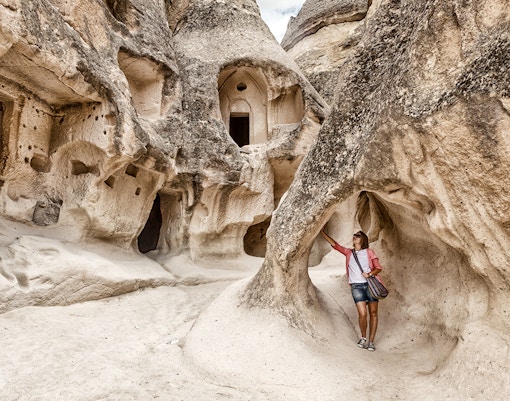
In the Phrygian era (8th–7th centuries BC), this way of life expanded further. The Phrygians continued carving homes, tombs, and functional spaces into the cliffs, adapting the volcanic terrain into permanent settlements. Their presence helped establish Goreme as a lived-in valley rather than just a temporary refuge.
Early Christianity (3rd - 4th centuries)

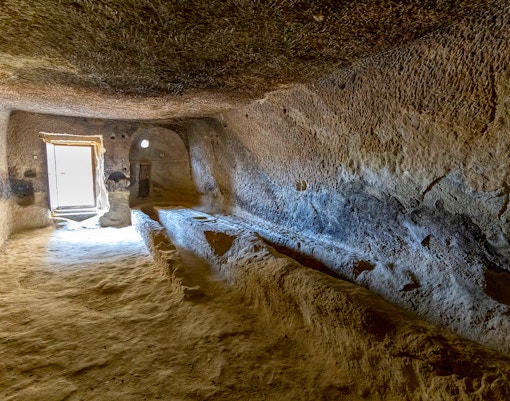
Goreme’s most transformative chapter began in the 3rd and 4th centuries with the rise of early Christianity. As Christians faced persecution under the Roman Empire, many fled to Cappadocia’s remote valleys. Goreme’s hidden caves and natural camouflage made it an ideal refuge. It was during this period that the valley truly emerged as a Christian sanctuary.
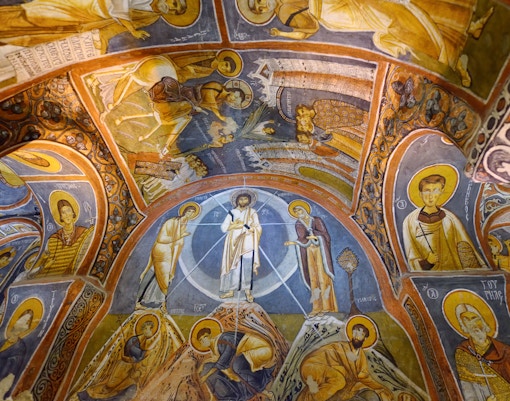
Byzantine Period (100 AD - 10th century AD)

From roughly the 1st century through the 10th century, under Byzantine rule, Goreme flourished as a major religious and monastic center. Early Christian communities expanded existing caves into chapels, monasteries, and living quarters, creating entire rock-cut cities. Settlements such as Korama and Matiana became important hubs of spiritual life. Between the 9th and 11th centuries, artists painted vivid frescoes of biblical scenes inside cave churches, many of which survive today and form the heart of the Goreme Open-Air Museum.
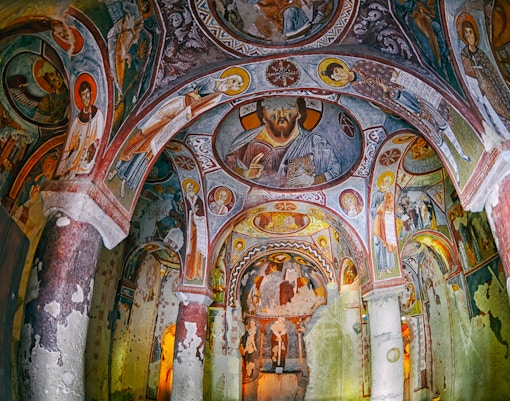
Iconoclasm Period and Arab raids (8th - 9th centuries)

The 8th and 9th centuries brought new challenges during the Byzantine Iconoclasm and periods of Arab raids. While religious images were banned elsewhere in the empire, Goreme’s secluded geography allowed icon worshippers to continue their practices discreetly. Monastic life not only survived but expanded, and church designs evolved to become more defensive and inward-looking as people retreated deeper into the rock.
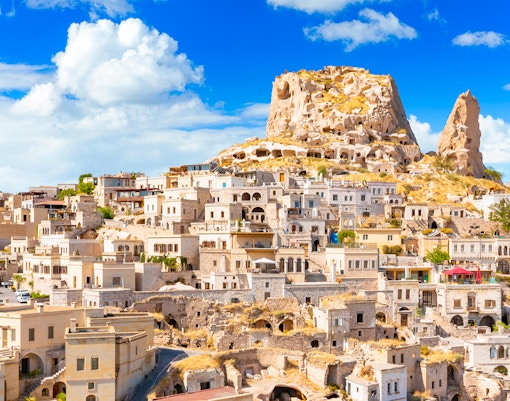
Seljuk and Ottoman Period (11th century)

From the 11th century onward, the region passed into Seljuk control and later became part of the Ottoman Empire. Compared to earlier centuries, this period was relatively peaceful. Cave dwellings remained in use alongside stone mansions, blending traditional and newer architectural styles. Structures like the Mehmet Paşa Mansion reflect how the valley continued to adapt while preserving its unique character.
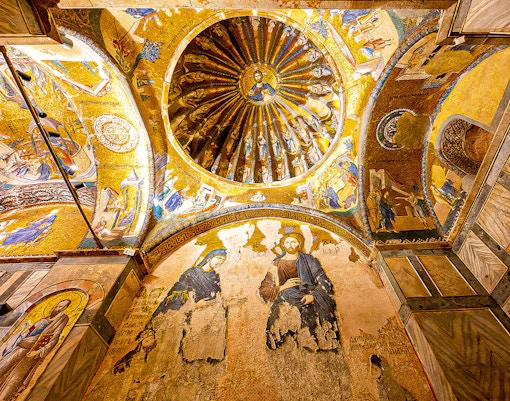
Modern era

In the modern era, Goreme underwent one final major shift. Following the population exchanges after the Treaty of Lausanne (1924–1926), the last Christian communities left the region. What remained was an extraordinary cultural landscape frozen in time. Today, Goreme Valley is protected as a UNESCO World Heritage Site, celebrated for its geology, rock-cut architecture, and layered history, and admired by visitors from around the world.
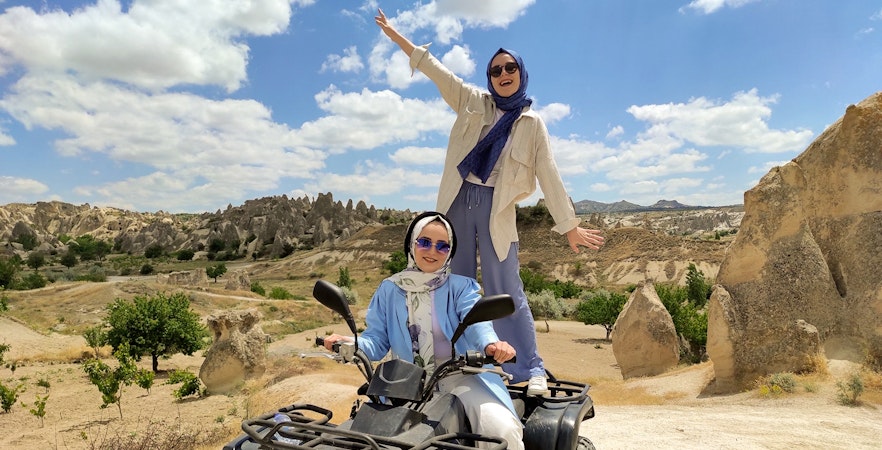
Adventure tours around Goreme Valley

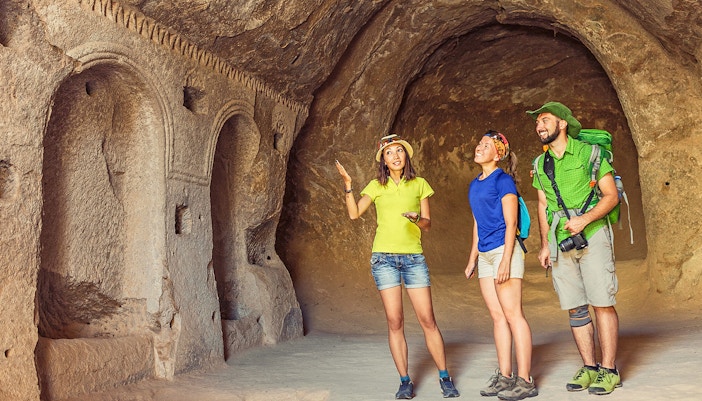
Explore guided historical and adventure tours in Goreme Valley for an immersive journey through time and experience the living history carved into every rock.

Goreme Valley today

Archaeological discoveries

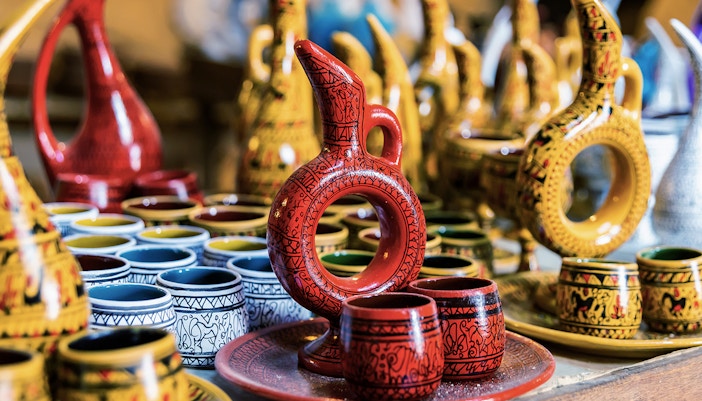
Recent archaeological research in Goreme Valley has unearthed artifacts that provide insight into the daily lives of its ancient inhabitants. Pottery, inscriptions, and remnants of frescoes reveal the sophisticated cultural practices and religious rituals performed in these hidden sanctuaries. Excavations continue to shed light on the evolution of cave architecture and the adaptation strategies of early communities. These discoveries not only validate historical texts but also offer a tangible connection to Cappadocia’s dynamic past.

Conservation and sustainable tourism

Today, efforts to preserve Goreme Valley’s historical and natural heritage are paramount. Local authorities and international organizations collaborate to protect the delicate cave structures from the impact of tourism. Sustainable tourism practices, such as guided tours and controlled visitor numbers, ensure that the valley’s ancient secrets remain intact for future generations. Visitors are encouraged to respect the site by following conservation guidelines, which help maintain the integrity of this unique historical landscape while enabling an immersive cultural experience.

Religious and cultural influences

Religious influences have profoundly shaped Goreme Valley’s history. Early Christian settlers carved churches and monasteries, using the region to create sacred spaces that emphasized humility and protection. Over centuries, these sites became centers for pilgrimage and religious art, featuring rare frescoes and iconography. The constant interplay between local traditions and external influences has shaped a unique cultural landscape that defines the valley today.

Frequently asked questions about Goreme Valley’s history

What is the historical significance of Goreme Valley?

Goreme Valley is significant for its natural formation, paired with cave dwellings and early Christian sanctuaries that highlight the region’s spiritual and cultural heritage.

How was Goreme Valley formed?

The valley was formed through volcanic eruptions and gradual erosion of soft tuff, creating a surreal landscape ideal for cave carving by its early inhabitants.

What role did Goreme Valley play in the history of Cappadocia?

It served as a refuge and a center for religious activity, influencing the cultural and architectural development of the broader Cappadocia region.

How has Goreme Valley evolved over the centuries?

From a natural wonder shaped by volcanic forces to a man-made sanctuary with carved dwellings, the valley has evolved through successive waves of human occupation and cultural transformation.

Are there any famous historical events associated with Goreme Valley?

While no single event defines its history, the continuous habitation and transformation by early Christians during periods of persecution are among the valley’s notable historical narratives.

What archaeological discoveries have been made in Goreme Valley?

Researchers have uncovered artifacts such as pottery, inscriptions, and frescoes that provide insights into the daily lives and religious practices of its ancient communities.

How did the cave dwellings in Goreme Valley originate?

The soft volcanic rock allowed settlers to carve living spaces and places of worship directly into the landscape, a tradition that dates back to the Byzantine era.

How did religious influences shape Goreme Valley's history?

Religious influences led to the carving of elaborate churches and monasteries, making the valley a spiritual refuge and a center for religious art and pilgrimage that shaped its cultural legacy.

More reads

About

Facts

Plan your visit