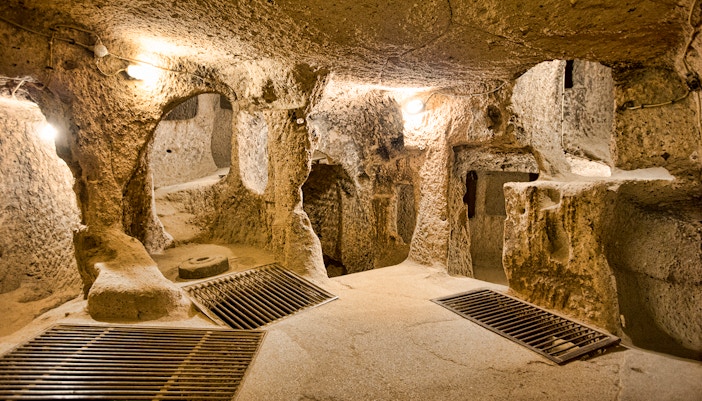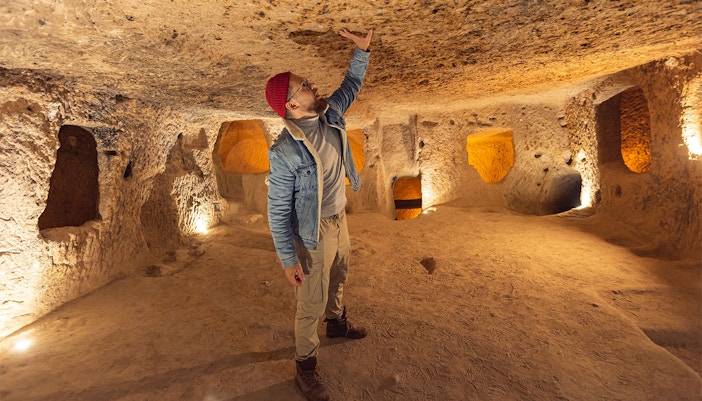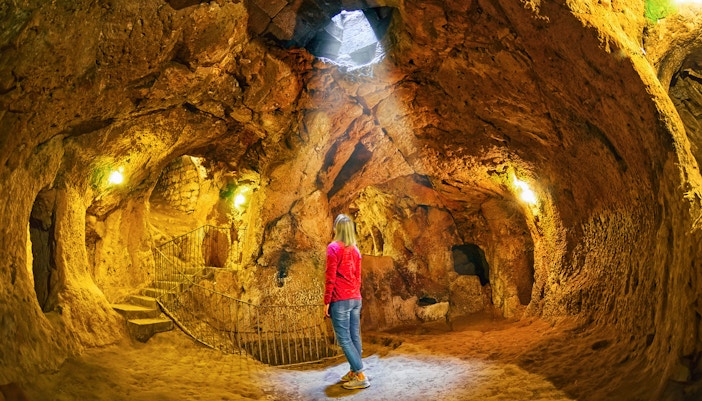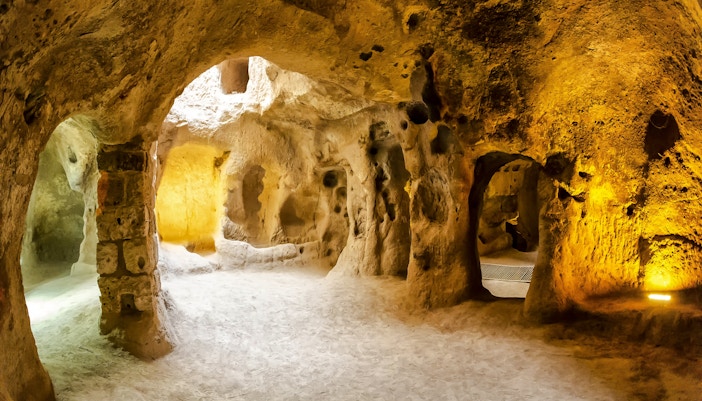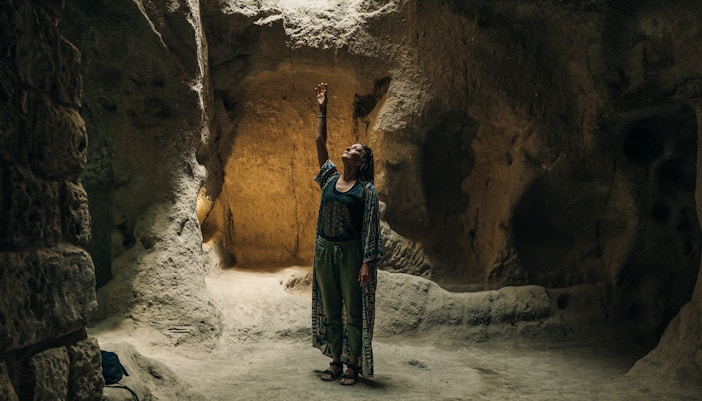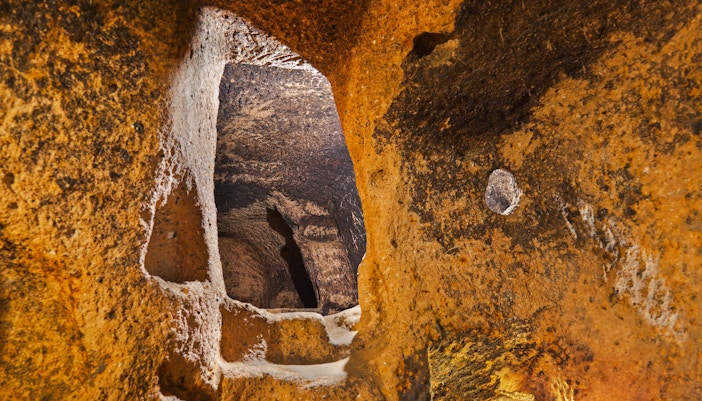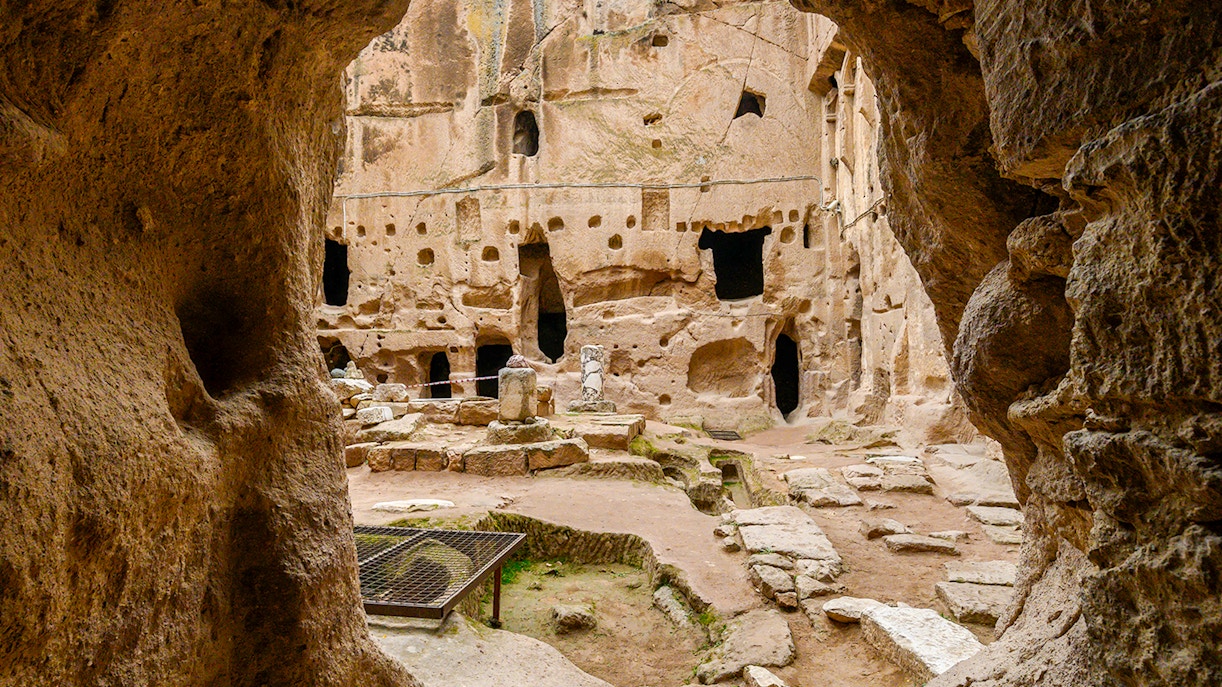
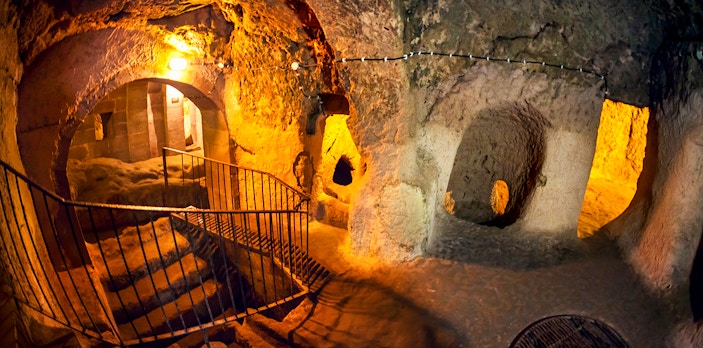
- In the Cappadocia context, an underground city is a carved, multi-level settlement, dug into the soft tuff rock, complete with living quarters, storage rooms, stables, ventilation shafts and tunnels connecting different levels.
- Ventilation shafts, rolling stone doors, narrow tunnels and deep levels are common features. While there are around 200 such subterranean cities in the greater Cappadocia region, only a handful are open for regular visitors.
- They are full subterranean complexes meant to shelter large groups of people for extended periods in times of danger. For example: the site at Derinkuyu Underground City is estimated to have housed up to 20,000 people with their livestock.
- They were built for defensive purposes, to provide refuge from invaders, raids or harsh weather conditions.
- These cities also offered religious and communal safety during times of persecution (particularly early Christian centuries) in underground hidden places of worship and living.
Underground cities near Goreme
Beneath the iconic fairy-chimney landscape of Cappadocia lies a hidden world of subterranean ingenuity: the ancient underground cities carved into the volcanic rock around Göreme Valley. These multi-level shelters were built for protection, survival, and community-living, offering an extraordinary and largely underground dimension to the region’s cultural heritage.
Although most of the valleys and surface caves of Cappadocia get the spotlight, the underground networks are equally fascinating. Read more to get an overview of what these underground cities are, why they were built, and a summary of the most accessible ones that lie in the region surrounding Goreme.
What is an “Underground City” and why were they built?
Key underground cities near Goreme
Key takeaways & tips to visit Goreme underground cities
- There are many subterranean cities beneath Cappadocia’s surface, some 200+ known, though only a fraction are open to visitors. These cities were built for defence, survival, and communal living, not merely novelty.
- The major Goreme underground cities are Derinkuyu, Kaymakli, Ozkonak, Mazi, Tatlarin, and Gaziemir, each offering distinct experiences.
- Most underground cities in Cappadocia can be visited on guided day tours from Goreme, Urgup, or Uchisar. These tours typically include hotel pickup, entry tickets, and a professional guide who explains the history and layout of each site.
- If you’re short on time, combine one underground city with nearby attractions, such as Avanos, Ihlara Valley, or Zelve Open-Air Museum, for a balanced day of sightseeing above and below ground.
- Independent visitors can drive or take local minibuses, but note that Derinkuyu and Kaymakli are the most accessible, with facilities, signage, and regular tour stops. Smaller sites like Mazi, Tatlarin, and Gaziemir offer a quieter, less commercial experience.
Frequently asked questions about Cappadocia underground cities
Archaeologists estimate there are around 200 hidden underground cities across the greater Cappadocia region. Only a few are excavated and open to the public, but the network beneath this volcanic landscape remains one of the most fascinating archaeological discoveries in Turkey.
No, only a handful of ancient underground cities in Turkey are safe and accessible. Popular sites such as Derinkuyu, Kaymakli, Özkonak, Mazi, Tatlarin, and Gaziemir are open, while others remain closed for preservation or still await excavation.
Yes, the main Cappadocia underground city sites are well-lit, managed, and safe for visitors. Some tunnels are narrow or have low ceilings, so those with mobility issues or claustrophobia should take extra care.
If you have limited time, visit Derinkuyu Underground City, the largest and most dramatic, or Kaymakli Underground City, which offers easier access and wider passages. Travelers looking for quieter exploration can try Mazi, one of the hidden underground cities near Goreme.
Hiring a local guide is highly recommended. Guides share fascinating stories about how people once lived underground, highlight key features, and help you navigate the complex tunnels of each ancient underground city in Turkey.
Visit in the early morning or late afternoon to avoid peak crowds. Off-season months (October to April) offer cooler temperatures and a more peaceful atmosphere underground.
You can spot them on most Turkey underground city maps. The majority lie south of Goreme, within short driving distance, making it easy to combine several sites in one day.
These vast subterranean networks were built for defense, survival, and religious refuge. Communities used them to hide during invasions, store food, and live safely underground, a testament to the ingenuity of ancient civilizations in central Turkey.
Yes, new sections and smaller underground cities found in Turkey continue to emerge through ongoing excavations, revealing even deeper layers of Cappadocia’s mysterious underground world.