Plan your visit to Zelve Open Air Museum
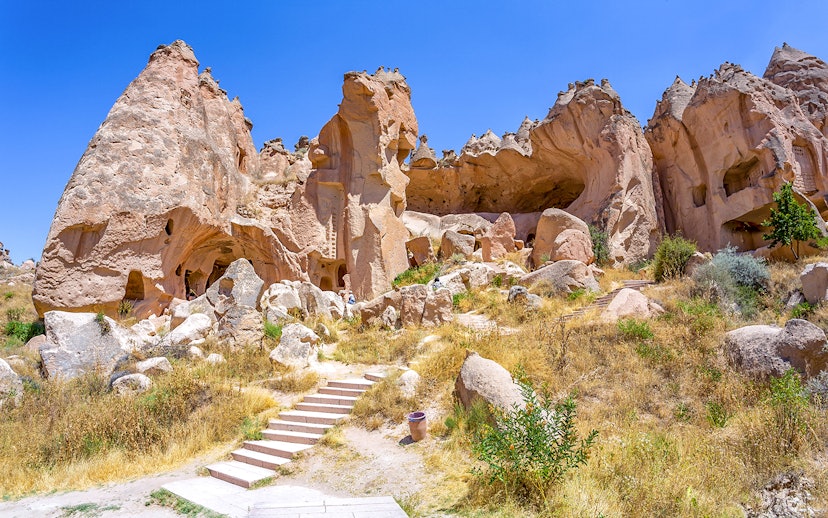
Zelve Open Air Museum is a sprawling cave-village site best known for its lived-in valleys, rock-cut churches, and fairy-chimney landscape. Unlike Göreme, this visit is less about standing in front of frescoes and more about walking, climbing, and piecing the place together as you move through it. The site feels bigger and more rugged than many visitors expect, and the difference between a rushed visit and a rewarding one usually comes down to timing — midday heat and uneven paths can wear you down fast. This guide covers the route, timing, tickets, and the practical details that matter.
Quick overview: Zelve Open Air Museum at a glance
If you want the short version before you plan, start here.
- When to visit: Daily from 8am–7pm in the main season, with shorter winter hours. The first 90 minutes after opening are noticeably calmer than 11am–2pm, because Red Tour groups and day-trippers usually hit Zelve later in the morning.
- Getting in: From $12 for standard entry. Guided full-day Red Tour options that include Zelve start from about $45. You can usually show up and buy at the gate, but booking online is the easier choice if you want to avoid payment hassles or lock in a tour.
- How long to allow: 1.5–2 hours for most visitors. Push it toward the longer end if you plan to explore all 3 valleys properly, stop often for photos, or add Pasabag on the same ticket.
- What most people miss: The narrow tunnel between valleys, the pigeon houses high on the cliff walls, and the signs of daily life inside the cave homes matter more here than any single church.
- Is a guide worth it? A guide adds real value if you want the monastic and village history explained as you go, but confident independent visitors can do a strong self-guided visit because the main route is marked and manageable.
Jump to what you need
🕒 Where and when to go
🎟️ Which ticket is right for you?
🗺️ Getting around
🏛️ What to see
♿ Facilities and accessibility
Where and when to go
How do you get to Zelve Open Air Museum?
Zelve sits in Cappadocia’s museum zone near Avanos, around 10km from Goreme and close to Pasabag on the main north-Cappadocia sightseeing route.
Zelve Open Air Museum, Aktepe, Avanos/Nevsehir, Turkey
- Taxi / car: From Goreme → 15–20 min → the simplest option if you’re visiting independently and want flexibility to add Pasabag.
- Tour transfer: Red Tour pickup from Cappadocia hotels → direct drop at the entrance → the easiest choice if you don’t want to arrange transport yourself.
- From Avanos by taxi: Avanos center → about 10 min → useful if you’re pairing Zelve with pottery workshops or lunch in town.
Getting here from nearby bases
Many visitors stay in different parts of Cappadocia, so your easiest starting point depends more on your hotel base than on city-center transit.
Goreme
- Distance: 10km
- Travel time: 15–20 min via taxi or car
- Time to budget: Leaves you plenty of time for a morning visit before Avanos or Devrent Valley
Avanos
- Distance: 6km
- Travel time: 10 min via taxi or car
- Time to budget: The easiest short hop if you want a half-day visit without overplanning
Urgup
- Distance: 18km
- Travel time: 25 min via taxi or car
- Time to budget: Best combined with a wider north-Cappadocia route rather than as a standalone outing
Which entrance should you use?
Zelve is straightforward once you arrive: there’s one main entrance, but visitors with pre-booked tickets move faster because they skip the payment step at the booth.
- Pre-booked tickets: For online ticket holders and combo-ticket users. Expect 0–10 min wait during late morning.
- On-the-day tickets: For walk-up visitors paying at the booth. Expect 5–15 min wait during 10:30am–1pm.
When is Zelve Open Air Museum open?
- April–October: 8am–7pm
- November–March: Shorter winter hours apply, usually closing earlier in the day
- Last entry: Aim to be inside at least 90 minutes before closing if you want time for all 3 valleys
When is it busiest? Late morning to early afternoon, especially from May–October, when Red Tour groups arrive and the exposed paths feel hotter and busier.
When should you actually go? Right at opening or in the last 2 hours of the day, when the light is softer, the valleys are quieter, and the walking feels easier.
Which Zelve Open Air Museum ticket is best for you
| Ticket type | What's included | Best for | Price range |
|---|---|---|---|
Zelve Open Air Museum Tickets | Entry ticket to Zelve Open Air Museum + access to Byzantine-era cave churches, monasteries, and rock-cut homes | A flexible self-guided visit where you want to move at your own pace and avoid being locked into a group schedule | From €19 |
Full-Day Red Tour with Fairy Chimneys & Zelve Open-Air Museum | Full-day northern Cappadocia tour + English-speaking guide + hotel pickup and drop-off + museum entry fees + lunch + local taxes and insurance | A packed sightseeing day where transport, timing, and site context matter more than exploring Zelve in depth | From €19 |
Goreme Open Air Museum Tickets + Zelve Open Air Museum Tickets | Entry ticket to Goreme Open Air Museum + entry ticket to Zelve Open Air Museum | A side-by-side comparison of Cappadocia’s 2 best-known open-air museum sites without booking them separately | From €46-€49 |
How do you get around Zelve Open Air Museum?
Zelve is best explored on foot, and most visitors need 1.5–2 hours to cover it without rushing. The entrance opens into the main valley, and the route gradually pulls you deeper into the site rather than presenting everything at once.
Valley route
- First valley: Cave homes, smaller chapels, and your first wide views into the settlement → budget 30–40 min.
- Tunnel link: Narrow rock-cut passage connecting valleys 1 and 2 → budget 5–10 min, longer if you stop for photos.
- Second valley: More domestic cave spaces and the lived-in side of Zelve → budget 20–30 min.
- Third valley: Monastery complex, cave mosque, wider cliff views, and pigeon houses on the valley walls → budget 30–40 min.
- Pasabag: Separate but included with your ticket, best done after Zelve by short drive or walk → budget 20–30 min.
Maps and navigation tools
- Map: On-site route map and official site signage → covers the valley layout → pick it up at the entrance and photograph it before you start.
- Signage: Good enough for the main route, but the site feels more coherent if you follow the valley order instead of wandering randomly.
- Audio guide/app: There’s no strong on-site audio guide setup, but QR-based panels and simple signage give enough context for a self-guided visit.
- Trail tools: Large outdoor sections and split paths make an offline map useful if you plan to add Pasabag, Cavusin, or Avanos on the same outing.
💡 Pro tip: Start with the full valley loop before you stop for long photo breaks as once the light gets better, it’s tempting to linger early and then skip the far end of the site.
What is Zelve Open Air Museum worth visiting for?

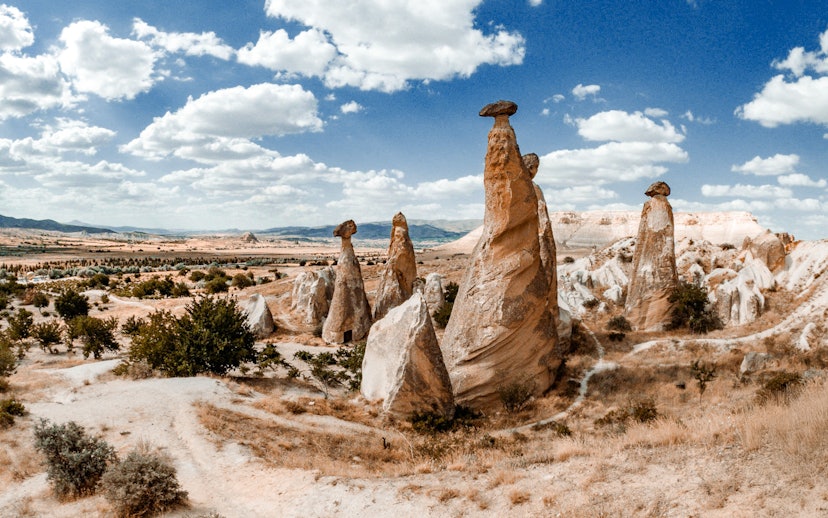
Pasabag fairy chimneys
Type: Rock formations and hermit shelter
These are the mushroom-capped fairy chimneys most people picture when they think of Cappadocia, and they’re included with the same ticket. What makes them worth slowing down for is the way geology and monastic history overlap here. One of the tri-headed pinnacles contains the shelter linked to St. Simeon. Most visitors photograph the formations from the path and move on without looking closely at the carved openings in the rock.
Where to find it: In Pasabag, a short walk or very short drive from the Zelve entrance
Balikli Church
Era: Early Byzantine, pre-Iconoclastic period
Balikli is one of Zelve’s oldest cave chapels, and its importance is easy to miss because it feels so plain compared with the painted churches at Goreme. That simplicity is the point: the carved crosses and stripped-back interior tell you a lot about how early worship worked here. Most visitors step in, glance around, and miss the small carved niches and wall details that survive in the dim light.
Where to find it: In the first valley, along the early part of the main walking route
Uzumlu Church
Era: Early Byzantine, pre-Iconoclastic period
Uzumlu is another modest chapel that rewards a slower look. Its scale is intimate, and the grape-related carvings and relief details make more sense once you stop treating it like a side cave and start seeing it as one of the site’s earliest sacred spaces. Most people rush through because there are no dramatic frescoes to grab attention, but the architectural simplicity is exactly what makes it different.
Where to find it: Near Balikli Church in the first valley
Direkli Church
Type: Rock-cut church with carved columns
Direkli stands out because the columns are carved from the living rock, which gives the interior a more structured feel than many of Zelve’s other chapels. It’s small, but it helps you understand how builders shaped space here rather than simply hollowing it out. Most visitors miss the relief crosses and focus only on the name-giving columns, when both features matter.
Where to find it: Toward the far end of the valley route, closer to the exit side of the site
Monastery complex and cave mosque
Type: Multi-faith historical core
This is one of the most revealing parts of Zelve because it shows how the site changed over time, from monastic retreat to lived-in village. The monastery’s interconnected rooms and the later cave mosque facing it make the long continuity of daily life here feel unusually tangible. Most visitors don’t pause long enough to notice how close these 2 religious spaces sit to each other.
Where to find it: In the third valley, around the broader central open area
Cave dwellings and valley tunnel
Type: Domestic spaces and connecting passage
The cave homes are what give Zelve its ghost-village atmosphere, and they’re arguably the site’s most distinctive feature. Kitchens, storage niches, soot marks, and worn living spaces make the visit feel less like an archaeological stop and more like walking through a recently abandoned settlement. Many visitors skip the tunnel between valleys or rush through it, even though it’s one of the clearest ways to feel how people moved through Zelve.
Where to find it: Throughout the first and second valleys, with the tunnel linking them
Pigeon houses
Type: Cliff-side agricultural structures
The dovecotes high on the valley walls look minor from a distance, but they tell you a lot about how people made this landscape workable. Their openings and painted facades were part of a practical system for collecting pigeon droppings as fertilizer, which turns them into a daily-life detail rather than decoration. Most visitors never clock them because they stay focused at eye level instead of scanning the cliff faces.
Where to find it: Best seen from the third valley, looking up toward the higher cliff walls
Facilities and accessibility
- 🚻 Restrooms: Restrooms are at the entrance area, so use them before you commit to the valley loop.
- 🍽️ Cafe: There’s a simple stop near the parking area for a cold drink or quick break, but it works better as a convenience stop than a full meal plan.
- 🪑 Seating: Seating inside the valleys is limited, so don’t expect many shaded rest points once you start walking.
- 🅿️ Parking: There’s a parking lot at the entrance, which makes self-driving one of the easiest ways to visit.
- ℹ️ Information boards: On-site signs and QR panels add basic historical context and help self-guided visitors make sense of the route.
- ♿ Mobility: Access is only partial at the entrance, because the main site has uneven ground, steep paths, rock-cut steps, and narrow cave passages that make a full visit difficult for wheelchair users.
- 👁️ Visual impairments: Wayfinding depends mostly on marked paths, signs, and QR panels rather than tactile tools, so visitors with low vision will likely need a companion on the steeper sections.
- 🧠 Cognitive and sensory needs: Zelve is quiet compared with Cappadocia’s busier museums, and the calmest visit is right at opening or in the last 2 hours of the day when tour groups thin out.
- 👨👩👧 Families and strollers: The entrance area is the easiest part with a stroller, but the full route is not pushchair-friendly end to end because of slopes, steps, and rough paths.
Zelve works well with children who like space, climbing, and cave exploration more than formal museum displays.
- 🕐 Time: Around 60–90 minutes is realistic with younger children if you prioritize the first valley, the tunnel, and a few of the larger cave spaces.
- 🏠 Facilities: Keep family logistics front-loaded because restrooms and the main services are near the entrance rather than spread through the site.
- 💡 Engagement: The tunnel, fairy chimneys, and the idea of a real village carved into rock usually hold attention better than trying to explain every church in order.
- 🎒 Logistics: Bring water, sun protection, and closed shoes, and avoid the hottest midday window when the open valleys feel longest.
- 📍 After your visit: Pasabag is the easiest child-friendly follow-up because it’s close, scenic, and shorter than another full museum stop.
Rules and restrictions
What you need to know before you go
- Entry requirement: Standard tickets and e-tickets both work, and this is an open-entry site rather than a timed-slot visit.
- Bag policy: Large bags, suitcases, and oversized luggage aren’t allowed inside, so carry only what you can manage easily on uneven paths.
- Re-entry policy: Re-entry is limited, so plan to finish the full valley route before heading back out for a long food or rest break.
Not allowed
- 🚫 Food and drink: Alcohol and drugs are prohibited on-site, and a small water bottle is much more practical than carrying a picnic through the valleys.
- 🚬 Smoking and vaping: Smoking isn’t permitted inside the museum grounds.
- 🐾 Pets: Pets aren’t allowed inside the museum grounds.
- 🖐️ Unsafe climbing: Don’t cross into roped-off or unstable sections, because the site includes fragile rock-cut spaces and steep drop-offs.
Photography
Personal photography is one of the main reasons people visit Zelve, and there isn’t a major room-by-room photo ban that shapes the experience here. The clearest restriction is drones, which are prohibited throughout the museum. Handheld photos are easy across the valleys and caves, but bulky setups are awkward on narrow stairs and in the tunnel, so keep your gear compact and avoid blocking the route for other visitors.
Practical tips
- Booking and arrival:You usually don’t need to book weeks in advance, but reserving your ticket online 1–2 days before your visit helps you skip the onsite ticket queue and makes the morning much smoother.
- Pacing: Save your energy for the third valley and the monastery area, because that’s where the route starts to feel more spread out and visitors who rushed the first half often fade.
- Crowd management: The best window is 8am–9:30am, when the site is cooler and you’re ahead of most Red Tour groups that tend to arrive later in the morning.
- What to bring or leave behind: Bring water, a hat, and sturdy shoes, and leave large bags behind. The tunnel and uneven steps make a light day bag much easier to handle.
- Food and drink: Eat before you enter or plan lunch after, because the on-site stop is better for a drink than a proper meal and the nearest stronger food options are in Avanos or Goreme.
- Route planning: Do Zelve first and Pasabag second on the same ticket, because Pasabag works well as a shorter photo-heavy finish once you’ve done the more demanding walking here.
- Weather: In summer, late afternoon is often a better call than midday since the open rock reflects heat, and the site feels longer when you’re doing the climbs in full sun.
What else is worth visiting nearby?
Commonly paired
Goreme Open Air Museum
Distance: 10 km, 15–20 min by car
Why people combine them: Goreme gives you Cappadocia’s best-known painted churches, while Zelve shows you the lived-in village side of the same landscape, so together they make the contrast much clearer.
See combo option
Commonly paired
Pasabag
Distance: 1 km, 15 min walk or 5 min by car
Why people combine them: It’s included with the same ticket, and it adds Cappadocia’s most photogenic fairy chimneys without asking for another long, demanding visit.
Also nearby
Avanos pottery workshops
Distance: 6 km, 10 min by car
Worth knowing: This is the easiest lunch-and-craft follow-up after Zelve, especially if you want something less physically demanding for the second half of the day.
Cavusin Old Village
Distance: 7 km, about 10 min by car
Worth knowing: It’s a good free add-on if you still have energy and want another cave-settlement stop with wide views and a more open, less museum-like feel.
Eat, shop and stay near Zelve Open Air Museum
- On-site: The cafe near the parking area is fine for a cold drink and a quick reset, but it’s better as a convenience stop than as your main meal.
- Avanos riverfront restaurants: 10-min drive, Avanos center; riverside Turkish spots are the most reliable post-visit option if you want a proper sit-down lunch after the walking.
- Goreme town center cafes: 15–20 min drive, Goreme center; best if you want more choice, quicker coffee stops, or an easy reset before another museum visit.
- Cavusin roadside terraces: 10-min drive, Cavusin village; a useful middle ground if you want a light meal with views and don’t want to backtrack far.
- 💡 Pro tip: Eat after your visit rather than before a long midday stop. Once you’re parked and inside, Zelve works best as one continuous loop instead of a broken-up walk.
- Avanos pottery studios: Avanos is the most worthwhile shopping stop nearby if you want ceramics that feel tied to the region rather than generic Cappadocia souvenirs.
- Roadside souvenir shops near Pasabag and the museum road: These are convenient for a quick magnet or postcard, but they’re more about ease than distinctive local craft.
Staying right by Zelve usually isn’t the best base unless you have a car and want a quieter, more rural feel. Most travelers are better off sleeping in Goreme, Urgup, or Avanos and visiting Zelve as a half-day outing. The site itself is isolated enough that it works better as an excursion than as a neighborhood anchor for your whole trip.
- Price point: The immediate area is limited, while nearby Cappadocia bases range from simple guesthouses to cave hotels and higher-end boutique stays.
- Best for: Visitors with a rental car who want easy access to north-Cappadocia stops without being in the busiest tourist center.
- Consider instead: Goreme works better for short stays and easy tour pickups, while Avanos suits travelers who want a calmer base with good food and easy road access to Zelve.
Frequently asked questions about visiting Zelve Open Air Museum
Most visits take 1.5–2 hours. That’s enough time to walk the 3 valleys, step into the main cave churches and dwellings, and stop for photos without racing through it. If you also want to add Pasabag on the same ticket, or you like exploring side caves slowly, budget closer to 2.5 hours.
No, you usually don’t need to book far in advance for Zelve Open Air Museum. This isn’t one of Cappadocia’s heavily timed-entry sites, and many visitors decide within a day or 2 of going. Booking online still makes sense if you want to avoid paying at the gate, keep your morning simple, or bundle Zelve with a tour or combo ticket.
Arriving right at opening is the best choice for most visitors. The first 60–90 minutes are cooler, quieter, and much better for photos before late-morning tour groups begin moving through the valleys. If you can’t do early morning, the last 2 hours before closing are the next-best window for softer light and lighter foot traffic.
Yes, but keep it small. Large bags, oversized backpacks, suitcases, and bulky luggage aren’t permitted, and even a medium bag feels annoying once you’re dealing with uneven steps, narrow cave spaces, and the tunnel between valleys. A light day bag with water, sunscreen, and a layer is the most practical setup here.
Yes, personal photography is a big part of the visit. Unlike some church-heavy sites, Zelve doesn’t revolve around strict room-by-room photo limits, so handheld photography is straightforward across the valleys. The main restriction visitors need to know is that drones are prohibited, and narrow passages make oversized camera setups more trouble than they’re worth.
Yes, and many visitors do. Zelve is a standard stop on Cappadocia’s Red Tour circuit, so guided groups arrive throughout the late morning and early afternoon. If you’re organizing your own group, the site is easier to manage when you keep the pace steady and avoid bunching up in tighter sections like the tunnel or steeper cave passages.
Yes, if your children enjoy outdoor exploring more than traditional museum displays. The site works best for kids who like walking through caves, spotting fairy chimneys, and moving around freely rather than standing still for long explanations. Younger children usually do better with a shorter 60–90 minute version of the visit rather than the full, slow loop.
Only partly. The entrance area is the easiest section, but the main route through the valleys includes uneven ground, slopes, rock-cut stairs, and narrow passages that make a full visit difficult for wheelchair users. It’s also not a good fit for strollers once you move beyond the flatter approach near the entry area.
Yes, but the best food options are near the site rather than deep inside it. There’s a simple café stop by the parking area for drinks and a quick break, but most visitors eat properly in Avanos, Goreme, or Cavusin before or after the visit. Zelve works better as a single walking loop than as a stop-start meal outing.
Yes, because the 2 sites give you different experiences. Göreme is stronger for painted churches and formal monastic art, while Zelve is stronger for atmosphere, cave dwellings, tunnels, and the sense of a real settlement carved into the landscape. If you only visit one, choose based on whether you care more about frescoes or the lived-in village feel.
Yes, Paşabağ is usually included with the Zelve ticket. That makes the pairing one of the easiest half-day plans in north Cappadocia, because you can do Zelve’s longer walking route first and then finish with the shorter, more photo-focused stop among Pasabag’s fairy chimneys.
Wear sturdy closed shoes and dress for an exposed outdoor site. The terrain is dusty and uneven, and even short climbs feel less comfortable in flimsy sandals. In summer, bring sun protection and water because shade is limited, and in spring or fall, a light layer helps since Cappadocia mornings can still feel cool.