While the Green Tour focuses more on the southern Cappadocia region, it still complements your understanding of Goreme’s cave dwellings. You’ll explore an underground city, trek through Ihlara Valley, and see how communities carved homes both above and below ground, giving context to Goreme’s own rock-cut lifestyle.
Goreme Valley cave dwellings explained | What they are & how to visit
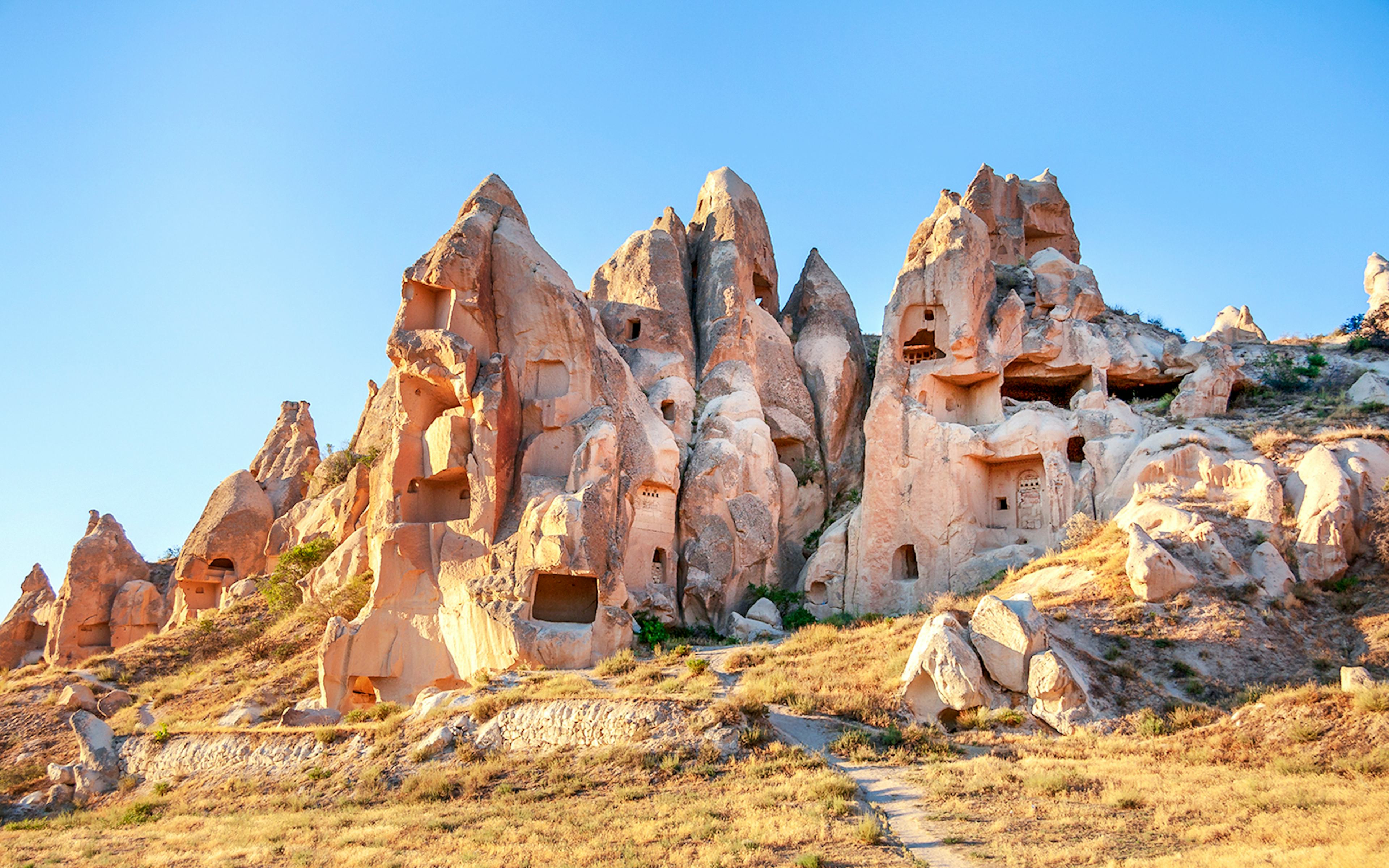
Goreme Valley’s cave dwellings are carved directly into the region’s soft volcanic rock, creating a landscape of ancient homes, chapels, and communal rooms shaped by centuries of life. These rock-cut spaces show how early communities adapted to the terrain, leaving behind a compact, open-air world of shelters, frescoed churches, and narrow passageways that still define Goreme today.
Top things to see in Goreme Valley cave dwellings
1/6
Goreme Open-Air Museum
A complex of rock-cut churches, monasteries, refectories, and dwellings with remarkable frescoes, the most visited site in Cappadocia, and a major reason Goreme National Park holds UNESCO World Heritage status. Expect vivid Byzantine paintings, carved chapels, naves, and monastic rooms that show what daily life looked like centuries ago. Some areas require an additional ticket (such as the Dark/Black Church), and a guided visit or audio guide helps you understand the symbolism and history behind each chapel.
Nearby rock churches & chapels
A number of historically important cave churches sit right around Goreme, each offering unique frescoes and architectural details. Tokali (Buckle) Church is known for its vibrant fresco cycles and detailed storytelling panels covering scenes from the New Testament. Elmali, St. Barbara & Cavusin Churches are smaller but atmospheric chapels featuring cross plans, geometric motifs, and early iconographic styles. Many of these can be reached on foot or with a short taxi ride from Goreme.
Cave homes & boutique cave hotels
Beyond the historic dwellings, Goreme is dotted with renovated cave homes that have been transformed into boutique hotels. Staying in one is part of the Cappadocia experience — think curved stone interiors, natural insulation that keeps rooms cool, cave-style suites, and rooftop terraces overlooking the valleys. Some properties also feature cave spas, panoramic breakfast decks, and restored family dwellings that show how people once lived inside the rock.
Photo & viewpoint spots
Goreme offers some of the region’s most iconic photo locations. At sunrise balloon viewpoints, watch dozens of hot-air balloons rising over the cave dwellings and fairy chimneys. Sunset panorama points provide wide, elevated viewpoints around Goreme where the rock formations glow orange and pink at dusk. Love, Rose & Pigeon Valleys: Walk or drive to these nearby valleys for close-up shots of fairy chimneys, narrow cave entrances, and eroded cliffs.
Valley walking trails with scattered cave dwellings
Goreme’s surrounding valleys, especially Zemi, Meskendir, Red, and Rose Valley, are filled with smaller, often unmarked cave rooms, pigeon houses, and remains of old dwellings carved into cliff walls. These trails let you experience the landscape at a slower pace: narrow paths winding between rock towers, natural arches, and hidden chapels that you wouldn’t see from the main roads.
Ancient pigeon houses carved into cliffs
All around Goreme you’ll notice small, square openings carved high up in the rock. These are historic pigeon houses. Locals carved and decorated them centuries ago to collect pigeon droppings, which were used as natural fertilizer for vineyards. Many of these carved facades still survive, especially in Pigeon Valley, offering a glimpse into traditional farming practices and the clever ways communities used the landscape.
Best tours to explore Goreme Valley cave dwellings
Red Tour
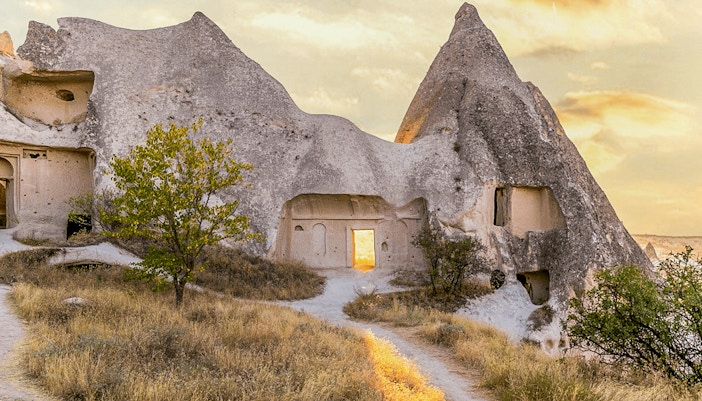
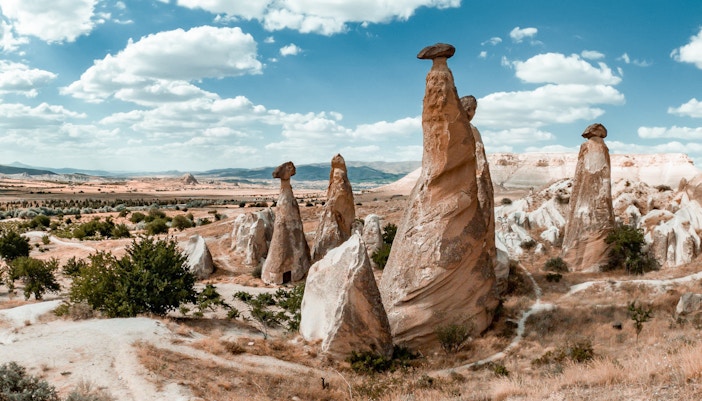
The Red Tour is the most relevant guided experience for Goreme itself. It covers key viewpoints, fairy chimneys, and the Zelve Open-Air Museum, a major cave settlement similar in style to Goreme cave room dwellings. This tour is perfect for first-time visitors who want structured explanations and convenient access to nearby cave sites.
Derinkuyu underground city
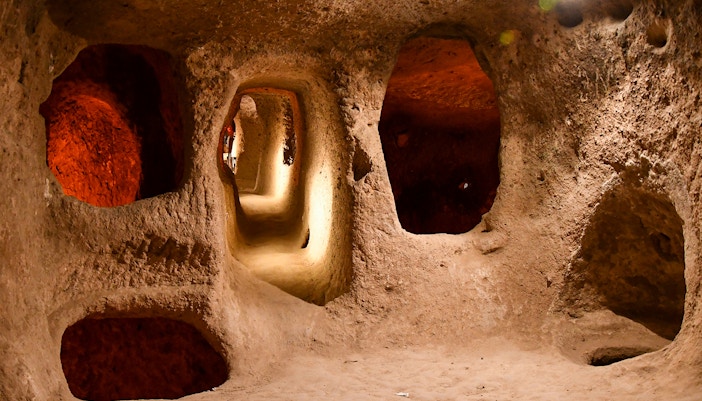
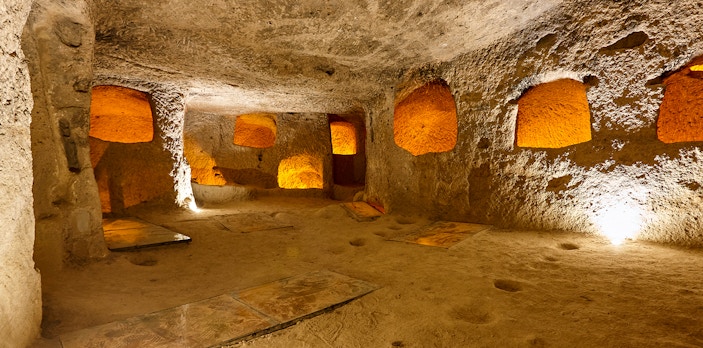
Derinkuyu adds essential context to the cave-dwelling story. Visiting this underground city highlights how ancient communities created multi-level living spaces beneath the earth, a fascinating counterpart to Goreme’s above-ground dwellings.
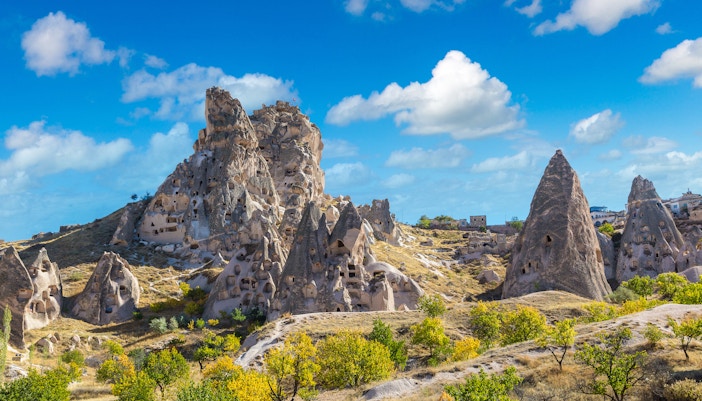
Goreme Open-Air Museum
If you prefer exploring at your own pace, a standalone ticket to the Goreme Open-Air Museum gives direct access to the region’s best-preserved rock-cut churches and monastic dwellings. Add an audio guide or a short guided tour for deeper context
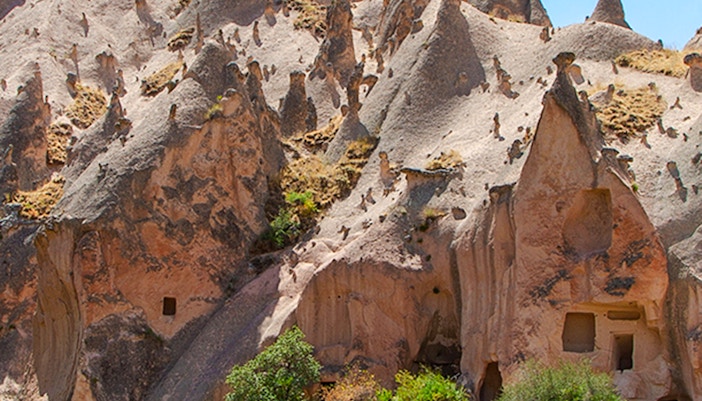
Zelve Open-Air Museum
Zelve is another cave settlement near Goreme, featuring tunnels, cave houses, monasteries, and a dramatic cliffside layout. A ticket here lets you explore a vast complex similar to Goreme but with a more open, abandoned-village feel.

Goreme Valley hot air balloon tour
The most iconic way to experience the cave dwellings is from above. This sunrise balloon flight lifts you over Goreme’s valleys, offering panoramic views of fairy chimneys, cave homes, and the surrounding rock formations. Ideal if you want a dramatic visual overview before exploring the dwellings on foot later.
Insider tips to make your Goreme cave dwelling visit easier
- Start at opening time: You’ll get empty paths inside the rock-cut churches, fewer group tours, and clean fresco photos without crowds.
- Follow the one-way loops: Some churches and tunnels have narrow, single-file passages. Doing the loop in the correct direction saves time and avoids bottlenecks.
- Bring a small torch: Some rooms and stairways are dimly lit. A phone flashlight works, but a small torch helps you see carvings and ventilation shafts without disturbing others.
- Look for hidden symbols: In larger churches, check the corners near the altar for crosses, monastic inscriptions, and early Christian symbols carved right into the rock. They’re easy to overlook but fascinating.
- Skip big backpacks: Narrow corridors make them awkward; store them or bring a small sling instead. Also, mind your head to avoid injuries!
- Visit Dark Church if open: It requires a separate ticket, but it has the most vivid, best-preserved frescoes in Goreme. Totally worth the short climb and extra fee.
Frequently asked questions about Goreme Valley cave dwellings
While you can explore independently, a guide adds historical context, saves time, and tours often include hotel pickup. Guided visits are recommended for first-timers.
The Red Tour typically covers Goreme’s nearby highlights and will include the Open-Air Museum. Green Tours focus on the southern rim and underground cities. If the museum is your priority, choose Red or book a separate Open-Air Museum tour.
Plan 1.5 to 3 hours, depending on your interest in frescoes and whether you join a guided tour.
Public sites and museums are managed for visitor safety; private/unmarked caves may be unstable and should not be entered. Follow signposts and guide instructions.
Yes. Many boutique hotels have renovated cave houses with modern amenities; book early for popular travel periods.
Restrictions vary. Some chapels prohibit flash or photography to protect frescoes. Check signage and respect guidelines.


